
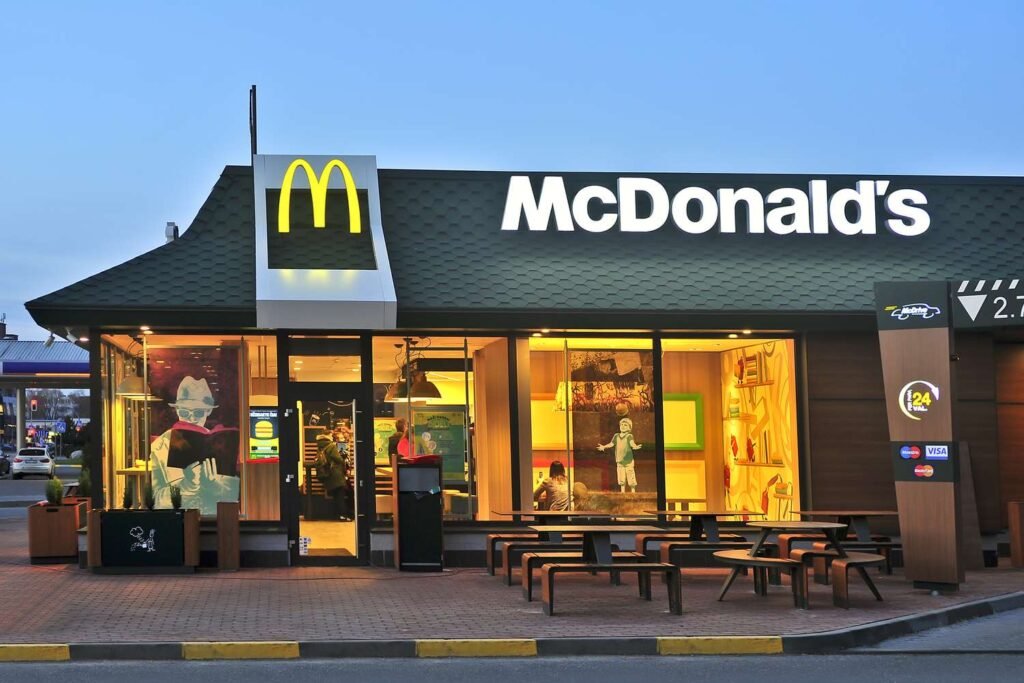
The Humble Beginnings: McDonald’s Family Shop
In 1940, Richard and Maurice McDonald established their first small family-owned hamburger stand in San Bernardino, California. This marked the inception of what would evolve into one of the world’s largest and most recognizable fast-food chains. The brothers had a clear vision of creating a fast-food service that was efficient, consistent, and customer-centric. They believed that quality service would be the cornerstone of their business, which ultimately led to the development of the innovative “Speedee Service System.”
The Speedee Service System revolutionized traditional restaurant methods by emphasizing speed and efficiency. At that time, many competitors relied on longer preparation times and seated dining experiences. The McDonald brothers, however, aimed for a quick-service model where customers could enjoy affordable quality meals without the need for extensive waiting. This unique approach allowed the McDonald brothers to serve a high volume of customers, catering to the growing demand for fast food in post-war America.
One of the key differentiators for the McDonald brothers was their commitment to product consistency. They carefully standardized their menu, focusing on a limited number of items, primarily centering around hamburgers, fries, and beverages. This not only simplified operations but also ensured that customers received the same quality meal regardless of the location they visited. The emphasis on fresh ingredients and efficient preparation workflows created a reliable dining experience that quickly garnered a loyal customer base.
The McDonald brothers’ approach set them apart from local competitors and laid the groundwork for future growth. Their innovative concepts in fast food service, combined with an unwavering focus on quality and consistency, positioned McDonald’s as a formidable player in the burgeoning fast-food market. As they continued to refine their operations, it became evident that the foundation they built at their humble family shop was destined for greater expansion.
Revolutionizing Fast Food: The Birth of the Franchise Model
The emergence of the franchise model, pioneered by Ray Kroc in the 1950s, marked a transformative moment in the fast food industry. Kroc’s vision extended beyond merely selling hamburgers; he aimed to create an efficient, replicable business model that could thrive across diverse markets. Central to this approach was the standardization of menu items, which ensured a consistent experience for customers no matter the location.
Kroc recognized that consistency was paramount for customer loyalty and brand identity. By establishing precise specifications for every menu item, from the famous Big Mac to fries, he guaranteed that customers would receive the same taste and quality every time they visited a McDonald’s outlet. This standardization was not limited to products but extended to the entire operational framework, including kitchen layouts, cooking procedures, and service protocols.
To complement this standardization, Kroc also focused on enhancing kitchen efficiency. He implemented systems and techniques designed to streamline food preparation and reduce wait times, which were critical factors for success in the fast-paced environment of fast food. The “Speedee Service System,” introduced during this period, revolutionized the service model through assembly line techniques, thereby allowing McDonald’s to serve quality meals at unprecedented speeds. This innovation not only increased customer satisfaction but also enhanced turnover rates and profitability for franchisees.
Training was another essential element in Kroc’s strategy. He developed comprehensive training programs for franchisees, equipping them with the necessary skills and knowledge to uphold the McDonald’s standards. This emphasis on training ensured that every franchisee could operate seamlessly within the franchise network, contributing to the brand’s overarching success. As a result, McDonald’s rapidly proliferated across the United States, setting the stage for its future international growth, facing challenges along the way that tested its operational models but ultimately solidified its dominance in the fast food arena.
Operational Excellence: Systems and Processes That Built the Brand
McDonald’s has established itself as a leader in the global fast-food industry through meticulous operational strategies that prioritize consistency and efficiency across its franchises. At the heart of this operational excellence lies a robust supply chain management system that ensures ingredients are delivered fresh and promptly. This supply chain is carefully designed to maintain high standards while managing costs, allowing franchises to deliver quality meals without sacrificing profitability.
Quality control is another cornerstone of McDonald’s operational strategy. Every aspect of the food preparation process is subject to stringent quality checks, encompassing everything from sourcing ingredients to the final product served to customers. This commitment to quality reinforces the brand’s trustworthiness and customer satisfaction, which in turn fosters loyalty among its consumer base.
Employee training programs further enhance McDonald’s operational capabilities. The brand invests significantly in training its workforce to uphold its service standards. These programs not only educate employees about food safety and preparation practices but also instill McDonald’s values of customer service and efficiency. As a result, employees can execute their responsibilities effectively while maintaining the brand’s reputation for quick service and consistent quality.
Moreover, the implementation of technology has revolutionized McDonald’s operational processes. Innovations like automated ordering systems and real-time inventory management streamline operations and reduce human error. Such technologies enable franchises to respond swiftly to customer demand and optimize stock levels, ensuring that necessary ingredients are always available without overstocking.
Through a combination of supply chain management, rigorous quality control, comprehensive employee training, and advanced technology, McDonald’s has created an operational framework that sustains its position as a competitive player in the fast-food sector. The systems and processes in place allow for seamless operations across its global franchises, reinforcing the brand’s commitment to excellence.
Adapting to Change: Global Expansion and Innovations
McDonald’s journey from a small family restaurant to a global franchise giant is marked by its remarkable ability to adapt to diverse markets. The company recognizes that cultural preferences and consumer behavior vary significantly across regions, and as a result, it has tailored its offerings to meet local tastes. This approach not only fosters acceptance among consumers but also enhances the brand’s relevance in an ever-evolving global landscape.
Menu innovation plays a pivotal role in McDonald’s adaptability. In India, for instance, the absence of beef in the diet for most Hindus led to the introduction of the “McAloo Tikki” burger, featuring a spiced potato patty. Similarly, in Japan, seasonal offerings like the “Sakura McFlurry” have been particularly well-received, illustrating the brand’s commitment to localizing its menu while maintaining its core identity. Such innovations highlight how McDonald’s effectively responds to regional preferences, thereby solidifying its status as a go-to dining option worldwide.
Moreover, McDonald’s marketing strategies are tailored to resonate with local audiences. Successful campaigns often incorporate culturally relevant themes and leverage regional influencers. In some markets, the use of social media campaigns that highlight local ingredients or celebrate national holidays has boosted engagement and brand loyalty. By understanding and engaging with local communities, McDonald’s strengthens its position as a familiar and beloved choice among various cultural groups.
Partnerships with local suppliers further enhance the company’s adaptability. By sourcing ingredients locally, McDonald’s not only supports regional agriculture but also ensures freshness and quality in its offerings. Such collaborations exemplify a commitment to sustainability, which is increasingly important to today’s consumers. Through these strategies, McDonald’s continues to navigate the challenges of global expansion while remaining at the forefront of innovation in the fast-food industry.

